 |
| Mother in Paraguay whose son died after being sprayed on a pesticide farm. Via Telegraph UK |
1. Pesticides used on soy farms in the United States harm or kill wildlife.
2. Pesticides used on soy farms kill wildlife in other countries.
3. Pesticides used on soy farms kill children and people.
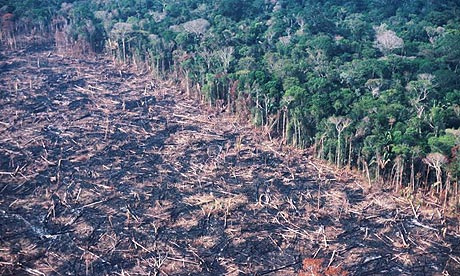
4. Soy production is a primary cause for destruction of the Amazon rainforest, the lungs of our planet. Aka, hundreds of thousands of species and millions upon millions of individual plants, animals and insects are killed for one crop. Actually, for 2 species - soy and cattle.
5. High doses of genetically modified soy may cause birth defects and miscarriage. This, however, is hard to truly know because there are no long term research studies into the impacts of genetically modified soy on human health.
6. One third of American agricultural land (78 million acres) are planted with soy, 90% of which is genetically modified. Genetically modified (GM) or genetically engineered means that the gene from one species of life is artificially inserted in a lab into the genetic code of a totally different species. These species would not be able to breed in nature. Companies produce GM crops to do a variety of things - withstand frost, kill bugs, produce their own pesticides, be able to withstand spray pesticides, produce certain oils or vitamin profiles, etc. Plants, by nature, pollinate far and wide. If (for example) a plant that is designed to kill all the insects around it gets into the wild and breeds with wild plants, this could have a HUGE impact on our ecosystems. Again, there are no ecological impact studies done on this issue, nor were these studies conducted prior to planting GM soy on multi-millions of acres.
7. A large percent of the massive amount of soy produced goes to feed livestock for meat, leather and production of other products. According to Cornell University researchers, raising animals on soy (versus pasture raised animals) is enormously wasteful of resources.
8. Buying a soy product trickles back to the soy industry. To the company, it does not matter if you are buying soy in tofu or in the form of a chicken that was raised on GM soy.
 |
| Image via Challenge Oppression |
Please do more research into these issues for yourself if you doubt the authenticity of this article. And consider this -- all processed, prepared, pre-packaged, and factory made foods contain soy and corn in them in some shape or form, particularly in the United States. Further, the booming biofuel industry also depends on soy and corn. A LOT of soy has to be grown in order to put soy in most foods and biofuels.
If you want to not destroy animals, rainforests, and the health of communities around the globe, stop eating and consuming soy as much as possible.
There are a few things you can do in this regard:
1. Stop eating and consuming soy products as much as possible. If you eat soy for dietary reasons, diversify and eat a variety of beans and legumes. Check out World's Healthiest Foods for profiles on protein, mineral, vitamin and other content in plant-based foods.
2. Always look at labels of things and don't eat/buy stuff with soy in it, particularly if it is not organic. This will be difficult at first, but with time you will probably be eating better than ever. If it is not organic, you can bet that it is pesticide ridden (might even be genetically modified to produce its own pesticides) and is definitely genetically modified.
3. Tell all your friends and family about these issues and to stop buying/using soy products. Contact your elected officials and say you do not want genetically modified crops planted, or at least that you want them labeled. Advocate for removal of government subsidies to giant agro-companies. Contact Cargill and other soy producing companies and tell them that you boycott their products until they remove themselves from rainforest nations.

